How the Bench got built
The Bench stayed dry farmland until water arrived. In 1871 William Morris dug a canal to carry Boise River water up to his land, and Morris Hill Cemetery dates to 1882. A streetcar line reached the Vista area in 1913, but most of the Bench didn't become suburban until after 1930. So much of the housing along Vista Avenue, Morris Hill Road and the streets around them dates from the middle of the century onward.
Clay under the slab
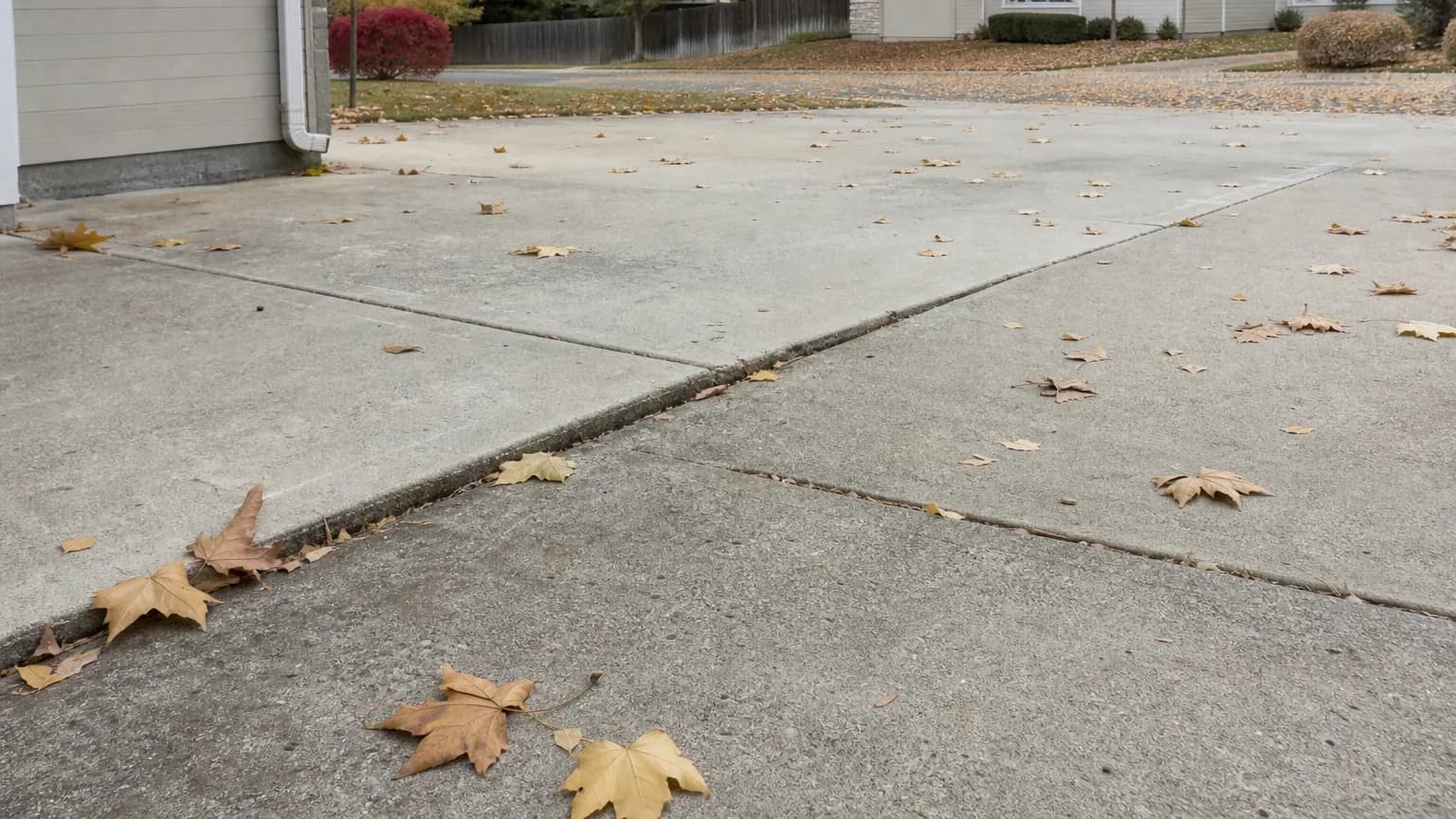
Ask a Boise gardener about the Bench and you'll hear it: heavy clay. Clay holds water, swells when wet and shrinks when it dries, so slabs on it rise and settle with the seasons and with irrigation. That's why sunken driveway panels, tilted walks and patios that slope back toward the house are the most common Bench problems. Raising a dropped panel is a leveling job; a slab that has cracked into many pieces is a replacement. Either way, fix the water source first.
For new work, ask how the contractor prepares a clay subgrade: how much is dug out, what base goes in, how it is compacted, and how water will be kept off it.
What Bench homeowners ask for
Wider driveways to replace single-car strips (within Boise's 20-foot front-setback limit in many districts, with Planning and Zoning approval), new garage aprons, backyard patios to replace old cracked slabs, RV pads where the lot allows, and walkways. The public sidewalk and approach belong to ACHD; work there needs ACHD approval and a permit holder licensed and bonded for it.
Back to the main guide: Boise concrete contractors.