Desert-edge ground
Kuna began as a railroad stop with a stage line to Boise, and south of town the land opens toward the Snake River canyon, the Kuna Cave lava tube and the Morley Nelson Snake River Birds of Prey National Conservation Area. This is caliche country: the lime-cemented hardpan documented on Boise and Snake river terraces forms where rainfall is low, and it can sit close enough to the surface to slow excavation for a slab base or footings. Ask contractors what they usually hit around Kuna and how that is priced.
Indian Creek runs through town and feeds irrigation; lots along it and near canals can be wetter than the open desert around them.
Shop slabs, RV pads and long driveways
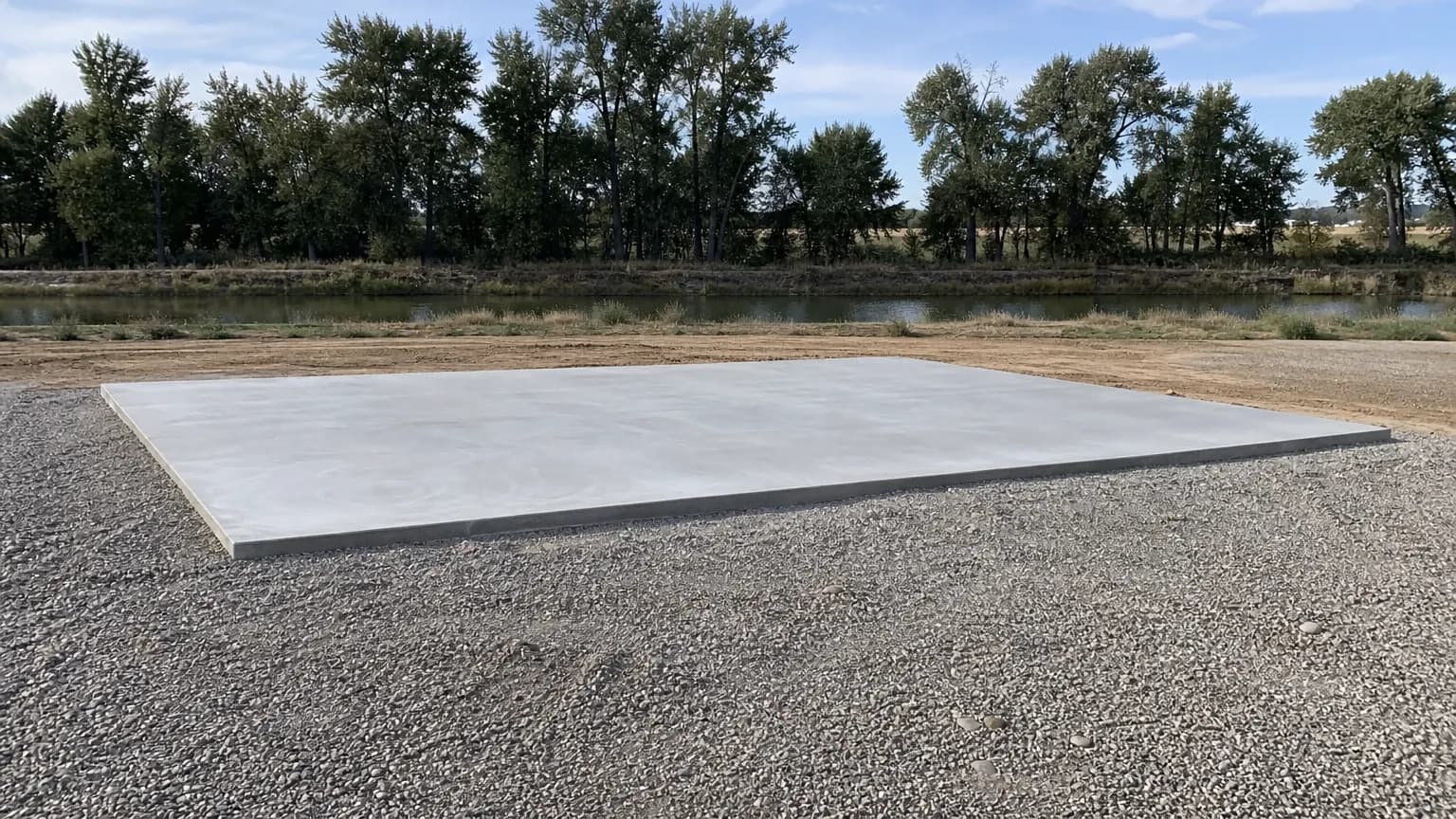
Larger lots bring bigger pours: shop and pole barn slabs, RV pads alongside the house and long driveways back to an outbuilding. On these, access drives the price. A concrete truck needs firm ground and turning room; if it can't reach the forms, a pump adds cost. Detached buildings over Boise-area size thresholds need foundations to the local 24-inch frost depth; see concrete foundations and confirm Kuna's rules with the city.
Heat, wind and new concrete
Summer highs in the area average in the low 90s, and lots on open ground have little shelter from wind. Heat and wind both pull water out of fresh concrete, which can cause surface cracking before the slab has cured. Early starts, windbreaks and about a week of moist curing help. In winter, skip deicers on new slabs and use sand.
Permits
Streets in Kuna belong to the Ada County Highway District; approach changes go through ACHD's Driveway Approach Request and permit, with a permit holder licensed and bonded for right-of-way work. Building-permit thresholds for outbuildings, walls and raised patios are the City of Kuna's (or Ada County's, outside city limits); we did not verify Kuna's specific numbers.
Back to the main guide: Boise concrete contractors.