Concrete Driveways in Boise
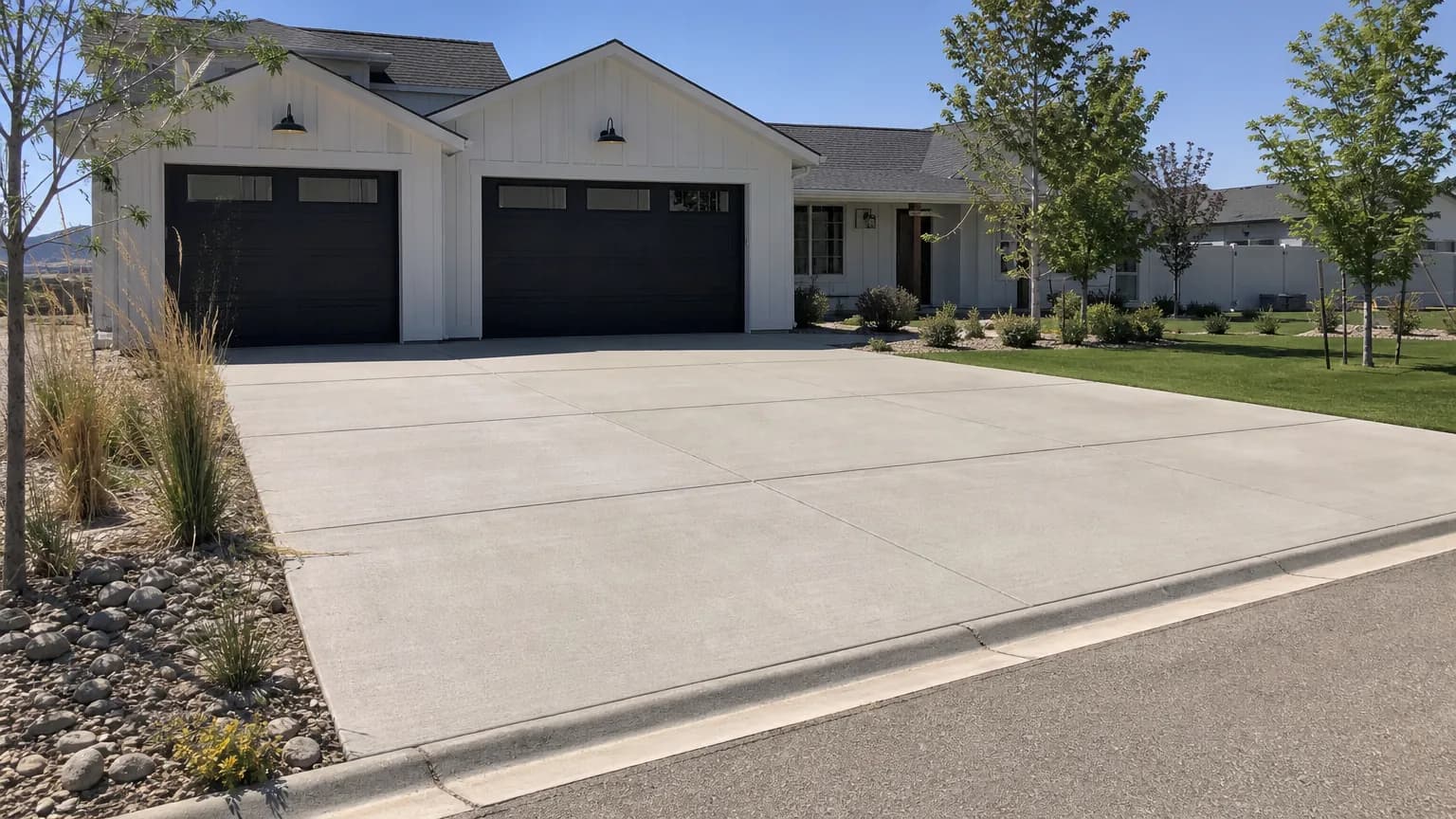
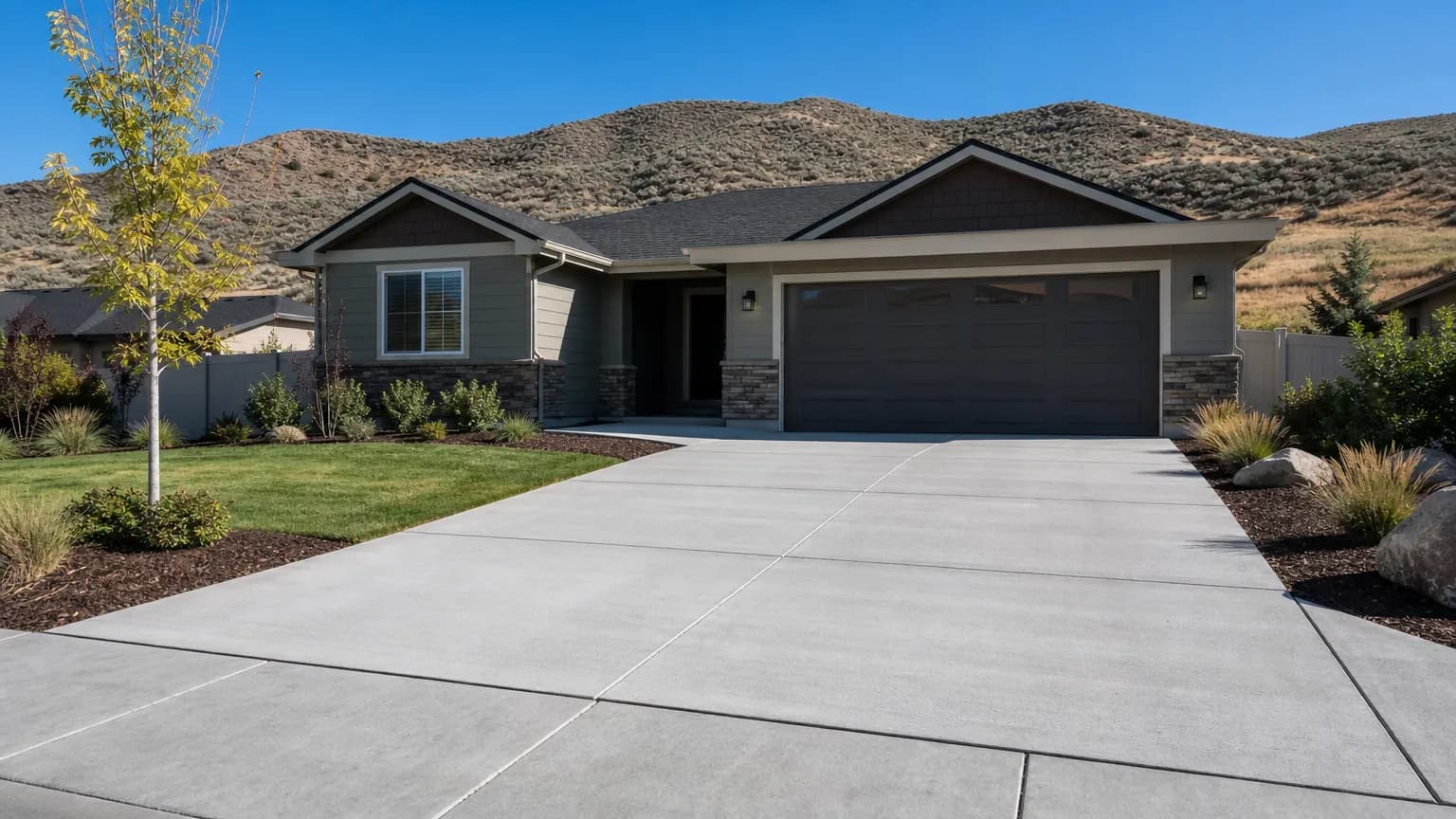
Most calls start with the driveway. For cars and light trucks the usual floor is a 4-inch slab, saw-cut into panels so shrinkage cracks follow the cuts instead of wandering. A common spacing rule is 24 to 36 times the thickness in inches, which puts joints roughly 8 to 12 feet apart on a 4-inch pour, cut a quarter of the way through. In a valley where most January nights freeze, the mix matters as much as the layout: air-entrained concrete around 4,000 psi with a low water-to-cement ratio is the common recommendation for freeze-thaw country.
Boise treats a driveway differently from most flatwork. The city's homeowner guide says a driveway needs no building permit but does need Planning and Zoning approval, and the zoning code limits a driveway inside the front setback to 20 feet wide in many residential districts. Where the driveway meets the street, the approach belongs to the Ada County Highway District. The concrete driveways guide walks through all three.
Questions worth asking at the walk-through
- What thickness and what mix, and is the concrete air-entrained?
- What will you find under the topsoil here, and how deep does the base go?
- Where do the joints go, and are they sawed or tooled?
- Who files the ACHD driveway approach request if the curb cut changes?
- Is tear-out and haul-off of the old slab part of this number?
Patios and Backyard Flatwork
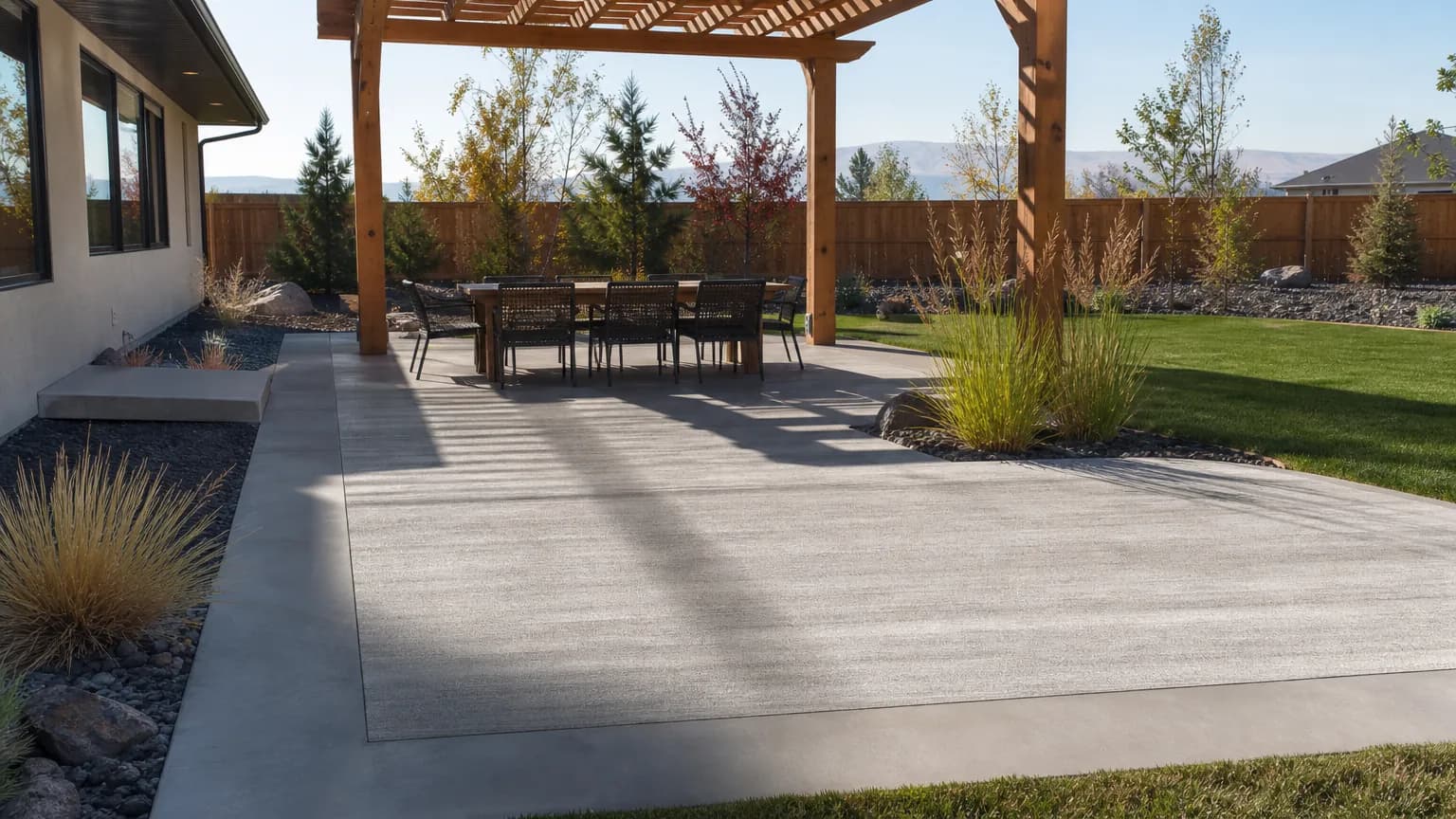
A concrete patio is the second most common job. Broom finish is the baseline; a smooth troweled border, integral color, a stamped pattern or exposed aggregate add cost and character. National guides put patios at about $5 to $18 per square foot, plain to custom. A 14 by 18 foot slab is 252 square feet, so that range works out to roughly $1,260 to $4,536 before anything unusual about the site.
Two Boise details shape patio plans. First, height: the city requires a building permit for a concrete patio more than 12 inches above grade, a lower trigger than the 30 inches that applies to walks and driveways. Second, water: most Treasure Valley subdivisions run pressurized irrigation from canal water through the summer, and a patio poured where sprinkler overspray or a downspout keeps the edge wet is a patio that settles. Slope the slab away from the house and plan where the water goes before the forms go in.
Shop Slabs, Hot Tub Pads and Garage Floors
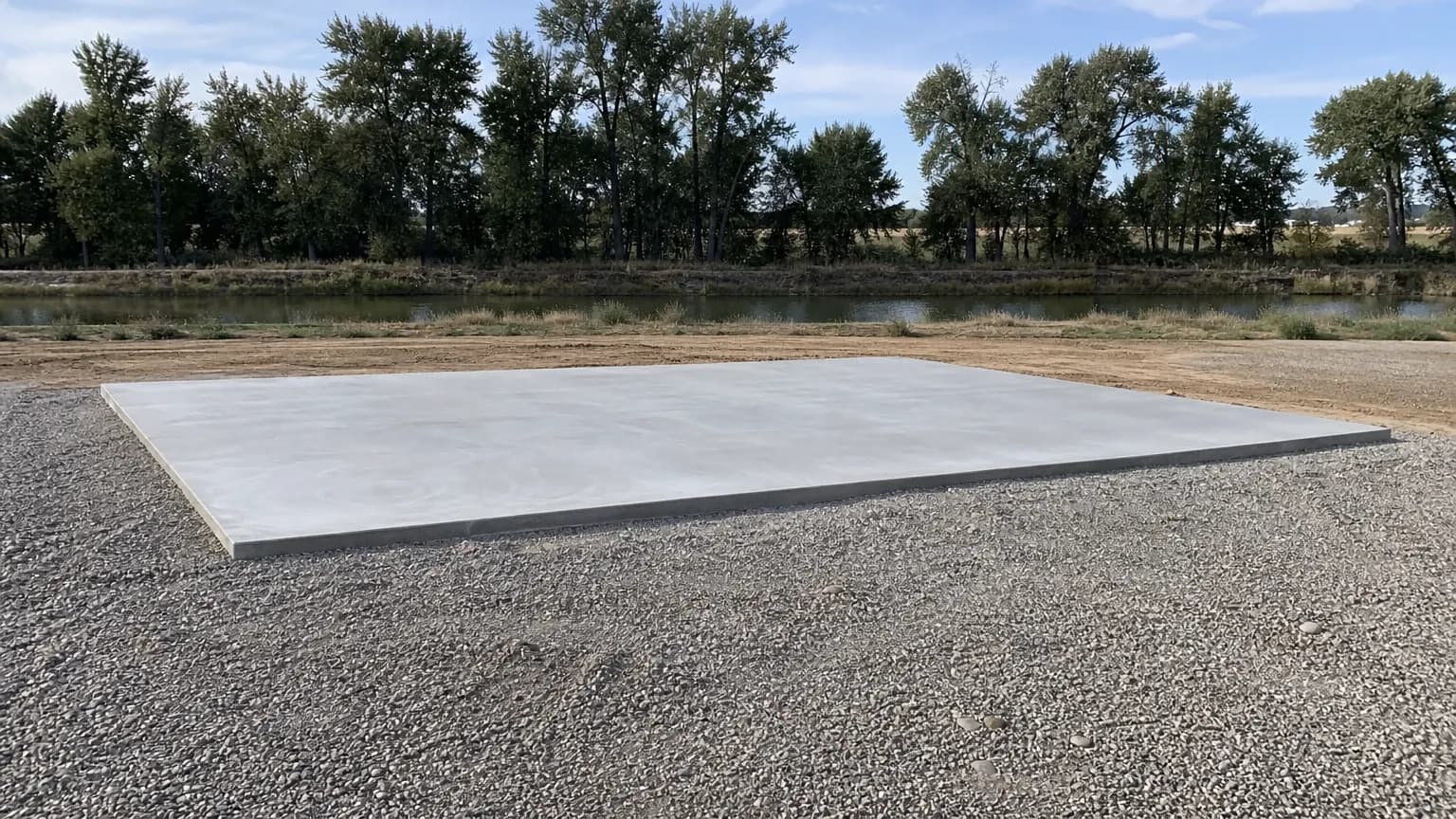
The pages people search hardest in the Boise area are about slabs: what it costs to pour a pad for a shop, a pole barn, an RV, a shed or a hot tub. National ranges run about $4 to $12 per square foot depending on thickness, reinforcement and prep. A 30 by 30 foot shop floor is 900 square feet, which at that range is roughly $3,600 to $10,800, and the thickness, the edge footing and the base under it move the number more than anything else.
Buildings change the rules. A slab that carries a building usually needs thickened edges or footings, and Boise's code sets frost protection at 24 inches below finished grade for foundations that require it. A slab that only carries a hot tub does not need footings, but it does need to be flat, thick enough for the filled weight and set on compacted base. The concrete slabs guide covers sizes, thickness and what a contractor needs to know to quote one.
What Concrete Costs Around Boise
No source we could check publishes Boise-specific concrete prices, so the ranges below are national installed figures from cost guides such as HomeGuide, Angi and HomeAdvisor. Local contractors typically quote inside or near these bands, and the only number that counts is a written quote for your site.
| Job | Typical national range (installed) |
|---|---|
| Plain broom-finish driveway | $6–$12 per sq ft |
| Stamped concrete | $12–$25 per sq ft |
| Patio, plain to custom | $5–$18 per sq ft |
| Slab or pad | $4–$12 per sq ft |
| Sidewalk or walkway | $6–$14 per sq ft |
| Tear-out of old concrete | $2–$6 per sq ft |
| Resurfacing overlay | $3–$9 per sq ft |
| Slab leveling (mudjacking) | $3–$8 per sq ft |
What moves a quote: thickness and mix, how much digging the base needs (caliche can turn a one-day excavation into two), access for a truck or pump, tear-out, finish, and any work in the public right-of-way. Line up quotes for the same scope before comparing totals.
Treasure Valley Ground: Caliche, Clay and River Gravel
Soil scientists have described caliche, a calcium-carbonate hardpan, on the lower, middle and upper terraces of the Boise and Snake rivers since at least the 1960s. It forms where rainfall is low, as water evaporates and leaves lime behind, and Boise gets about 11.5 inches of precipitation a year. A caliche layer can be hard enough to stop a shovel. For a slab that is mostly good news underneath and bad news during excavation: it bears weight well, but it can block drainage and slow digging for footings.
Not every lot sits on caliche. Bench neighborhoods are known for heavier clay. Lots near the Boise River often sit on silty sand and river gravel, sometimes with groundwater close to the surface. Boise's hillside standards even list collapsible soils, silts that lose volume when soaked, among the conditions that trigger extra review. Two neighbors a half mile apart can need different base prep, which is why a contractor should look at the ground before writing a firm number.
Freeze, Thaw and the First Winter
Boise summers are hot, with July highs averaging about 92 to 93°F and roughly 55 days a year at 90°F or more, so summer pours start early and need about a week of moist curing. Winters are the harder test. The January average low is about 25°F, the valley sees more than 100 frost nights a year, and the airport averages about 17.6 inches of snow. Water that gets into concrete and freezes expands, and repeated cycles flake the surface. That flaking is called scaling.
Air entrainment protects against that, but only once the concrete has matured. Industry guidance is to keep all deicers off new concrete through its first winter and use sand for traction instead. Even after that, salts are hard on concrete, and a penetrating silane or siloxane sealer is the common cold-climate recommendation. If your pour lands in October or November, ask how the contractor protects it from overnight freezes.