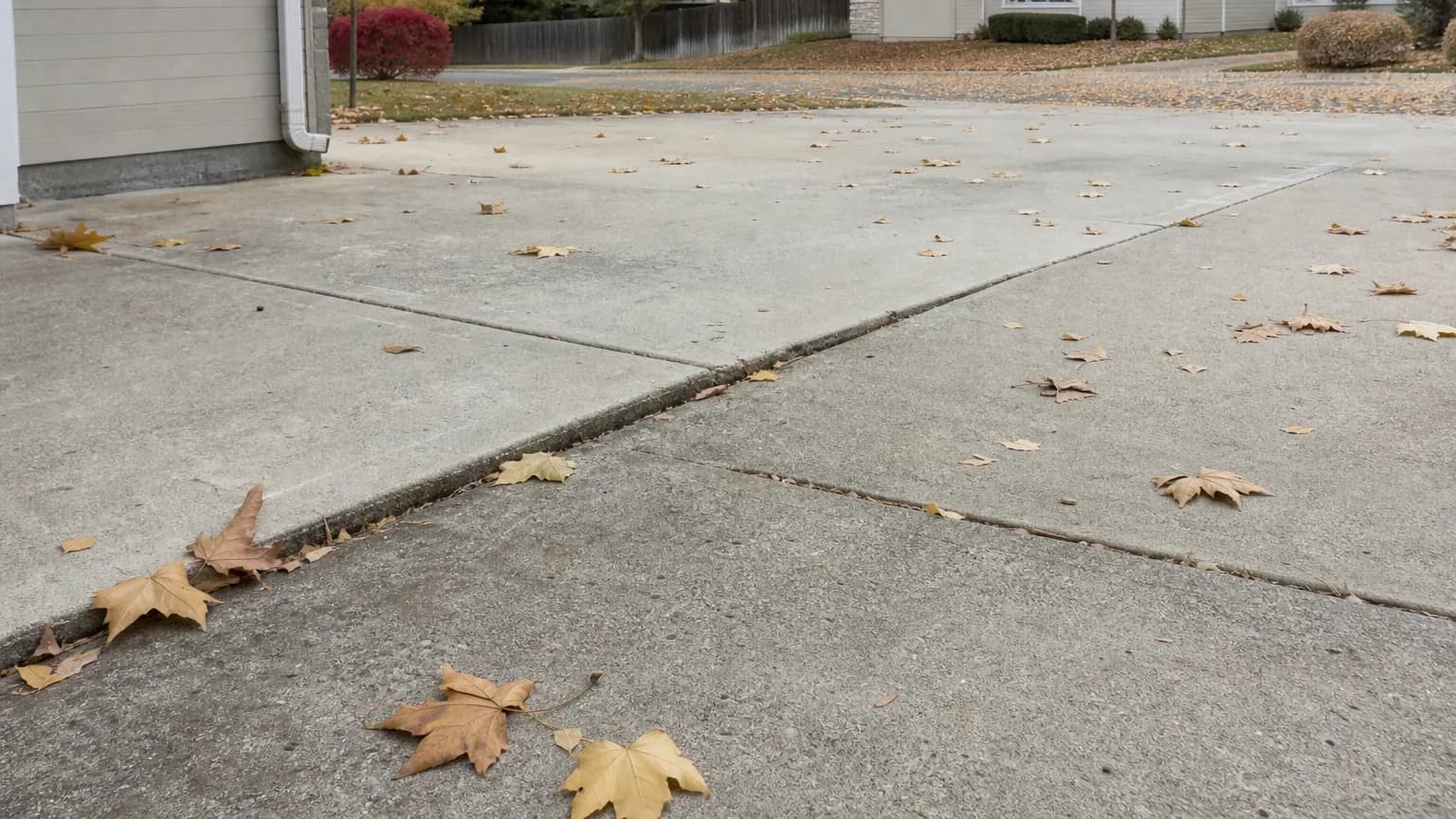
Why slabs sink in the Treasure Valley
A slab sinks when what's under it shrinks, washes out or compresses. Common local causes: irrigation or downspout water washing fine soil out from under an edge; loose fill that was never compacted next to a house or garage; and, in some areas, collapsible silty soils, which Boise's hillside code lists as a trigger condition, that lose volume when soaked. Freezing water under a slab edge can also lift and crack it.
Fix the water first. Leveling a slab that is still being undermined by a sprinkler line or downspout is paying twice.
Mudjacking or foam
| Mudjacking (slurry) | Polyurethane foam | |
|---|---|---|
| Material | Cement-and-soil slurry | Expanding two-part foam |
| Holes | Larger | Smaller |
| Weight added | Heavy | Light |
| Typical use | Driveways, walks, patios | Same, plus where added weight matters |
Both lift the slab by filling the void and pushing up. Contractors favor one or the other; ask why they recommend theirs for your slab.
When leveling won't work
A slab broken into several pieces lifts as several pieces. Heavily scaled concrete can be raised but still looks scaled. Heaving from tree roots needs the roots dealt with. In those cases see concrete repair or driveway replacement.
Cost
National cost guides put mudjacking at about $3 to $8 per square foot, and one source puts a typical job at roughly $660 to $1,900. Foam usually costs more. Search ads for concrete lifting in Boise carry some of the highest click costs in this market, a hint that local contractors compete hard for these jobs, so it pays to compare quotes. For a trip lip on a public sidewalk, check with ACHD or your city before hiring anyone; see walkways and sidewalks.
Back to the main guide: Boise concrete contractors.