Reading the damage
| What you see | Likely cause | Typical fix |
|---|---|---|
| Fine cracks in a random web | Shrinkage or surface drying at the pour | Usually cosmetic; seal |
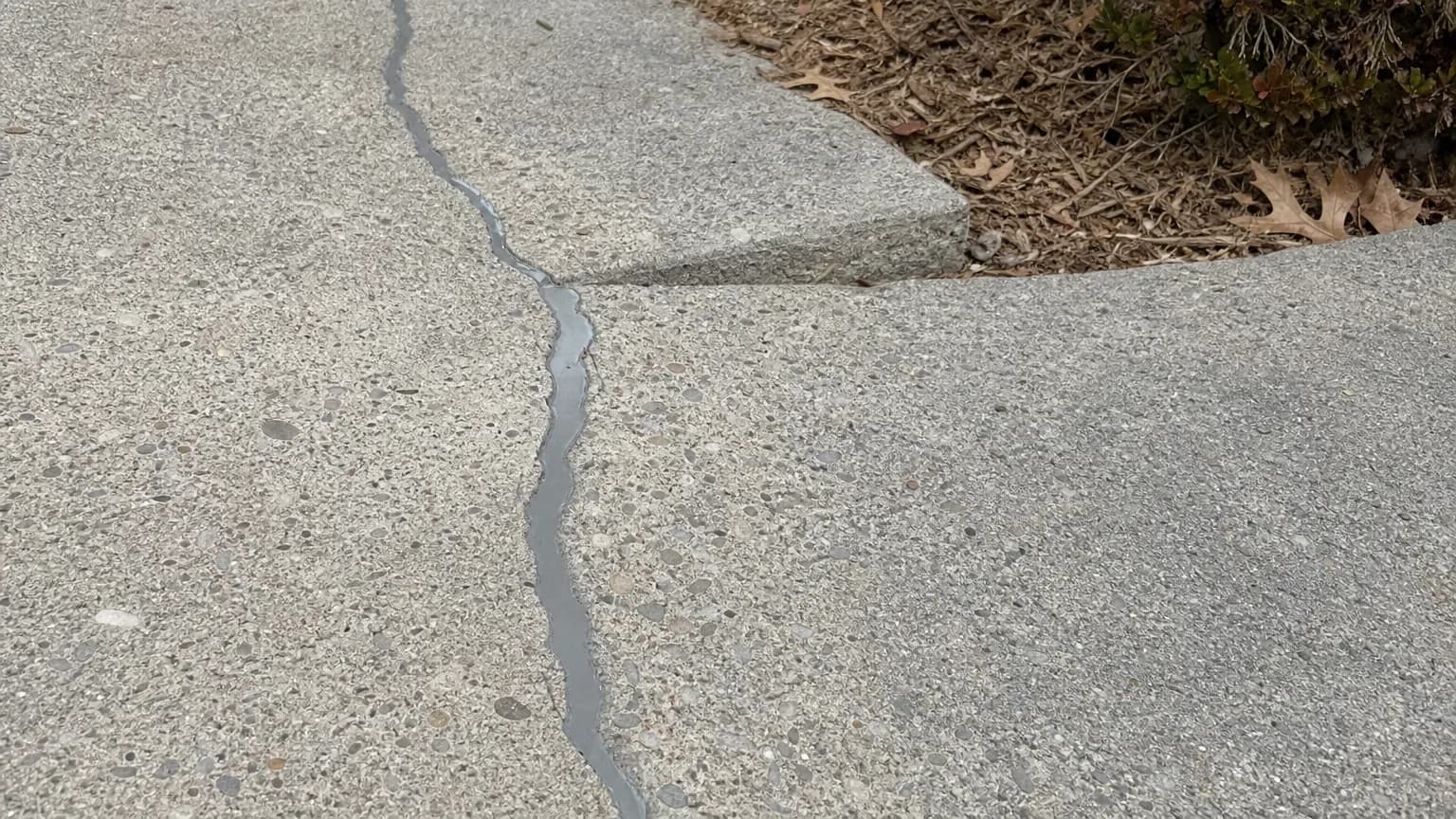
| One straight crack between joints | Joints too far apart, or a weak spot | Rout and fill with flexible sealant |
| Flaking, peeling top layer | Freeze-thaw scaling, often from deicers | Resurfacing if sound |
| Chunks popping out, rusty spots | Spalling, sometimes corroding steel | Patch; replace if widespread |
| Edge or panel dropped | Base washed out or settled | Leveling |
| Wide cracks that keep growing, heaving | Ground movement | Usually replacement |
Crack repair
A stable crack is cleaned out, often widened slightly with a saw or grinder so filler can bond, then filled with a flexible sealant or a rigid repair compound depending on whether it still moves. Flexible fillers suit cracks that open and close with temperature, which in Boise means most outdoor cracks. Filling keeps water out, and water that gets into a crack and freezes is what turns a hairline crack into a wide one over a few winters.
Crack repair does not make a crack disappear. The repaired line stays visible. If appearance matters more than function, ask about resurfacing the whole panel instead.
Spalls, pop-outs and scaling
Scaling is the shallow flaking of the top layer. It is the classic cold-climate failure, made worse when deicers go on concrete in its first winter or when the original mix had too little entrained air. Spalls go deeper, sometimes around corroding rebar. Small spalls can be patched with repair mortar; a surface that has scaled broadly but is still sound is a resurfacing candidate. If scaling keeps coming back, a penetrating sealer and fewer deicers are part of the fix; see concrete sealing.
When repair is the wrong money
Patching a slab that keeps moving buys a season. Signs that the problem is underneath: cracks that widen every year, panels that rock, heaving near trees or sprinkler lines, water pooling against the house. In those cases the base needs attention, and that means leveling or tear-out and a new pour. No reliable national per-crack or per-foot repair price turned up in our research, so compare quotes by scope.
Back to the main guide: Boise concrete contractors.