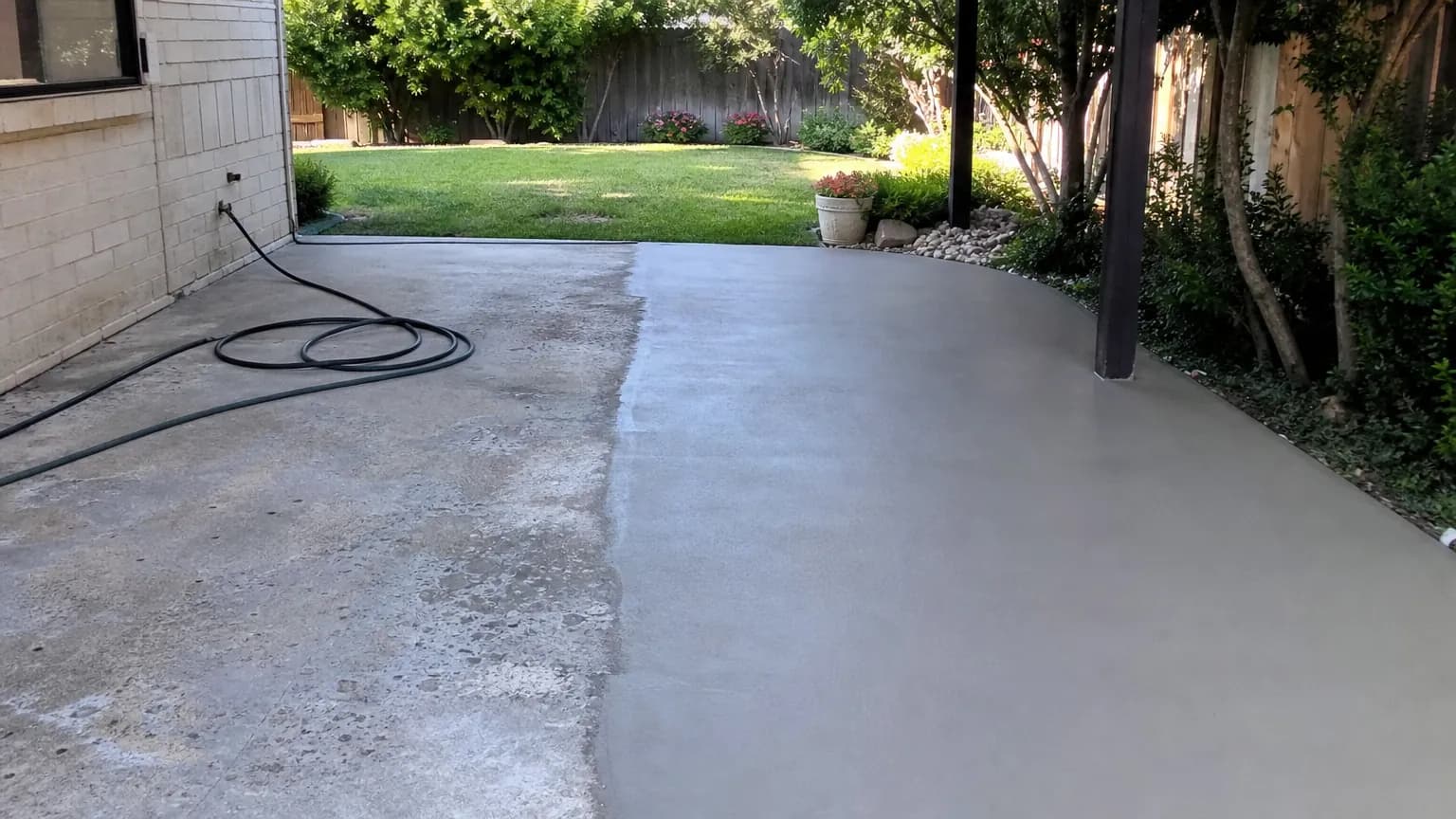
When resurfacing works
Resurfacing is made for a slab that is structurally fine but looks bad: scaled or flaking from winters of salt, pitted, stained, or covered in old patches. In the Treasure Valley, freeze-thaw scaling on driveways and walks is the most common reason people ask. If the slab is flat, not rocking and not cracked through in a pattern that keeps growing, an overlay can give it a new surface and a new look.
When it fails
An overlay copies whatever is underneath. If a crack is still moving, it reflects up through the new surface. If a panel is sinking, the overlay sinks with it. Poor prep is the other common failure: the old surface has to be cleaned and profiled, usually by grinding or shot-blasting, so the overlay bonds. Ask how the contractor will prepare the surface and how existing cracks and joints will be carried through. Control joints in the old slab should be cut back into the overlay.
Types of overlay
- Skim coat or resurfacer. A thin polymer-modified cement layer, often finished with a broom for grip. The budget option.
- Spray-down or knockdown texture. Common on pool decks and patios; textured and cooler underfoot.
- Stamped overlay. Thicker, colored and patterned like stamped concrete.
- Microtopping. Very thin, smooth decorative layer, more common indoors.
Cost
National cost guides put resurfacing at about $3 to $9 per square foot, averaging around $6, and decorative or stamped overlays at about $6 to $20. Compare that with tear-out ($2 to $6) plus a new plain slab ($6 to $12) to see whether resurfacing actually saves money on your slab. Seal the new surface; see concrete sealing.
Back to the main guide: Boise concrete contractors.