From mill town to planned community
In 1902 the Barber Lumber Company set up here, building Barber Dam between 1904 and 1906 to make a mill pond. The company town of Barber grew into the second-largest town in Ada County, then emptied almost overnight when the mill closed in 1935; many of its houses were trucked into Boise. The old mill site is now Harris Ranch, a planned community that took off in the 1990s, bounded by the foothills and Lucky Peak to the east, the Boise River to the south and Warm Springs Avenue to the west.
Foothill lots
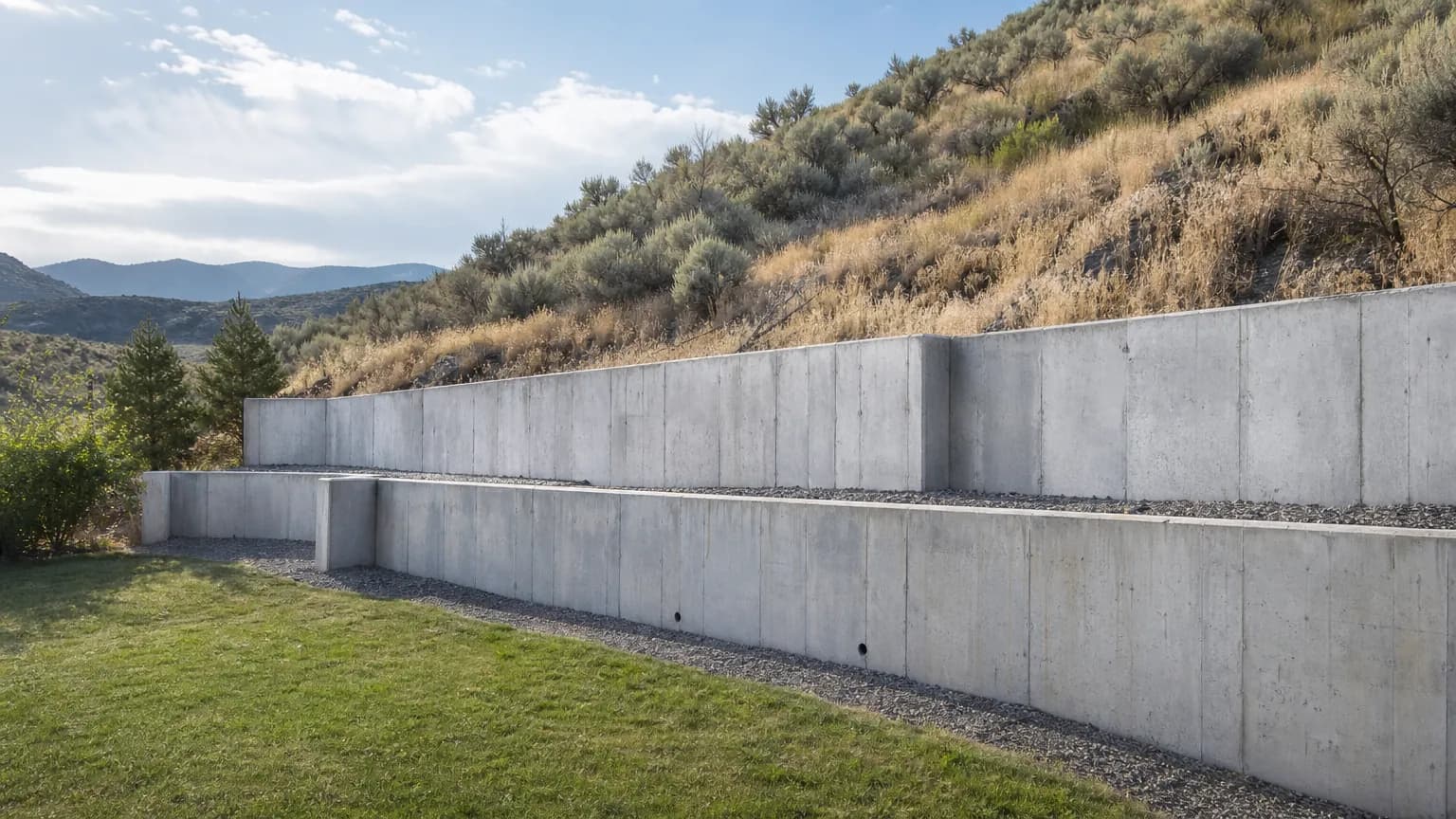
Lots that climb toward the foothills bring retaining walls, stepped patios and drainage questions. In Boise, a wall 4 feet or taller from the bottom of the footing, or a 2-foot wall holding back a slope or surcharge, needs a permit and engineering. Boise's hillside and foothills standards apply where slopes exceed 15 percent or where slope stability, springs, erosion, or expansive or collapsible soils are a concern. On a sloped lot, ask whether your project triggers either before you get attached to a design.
Near the river
Down toward the Boise River, ground tends toward sand and gravel, sometimes with groundwater near the surface, which affects footings for pergolas and walls and the base under slabs. Ask contractors what they've found on nearby jobs.
What gets poured here
Newer homes here lean toward decorative work: stamped or colored patios, pool decks, exposed aggregate walks and curbing. Planned neighborhoods usually have design guidelines, so check with your HOA on colors and front-yard hardscape. Approach and public sidewalk work goes through ACHD.
Back to the main guide: Boise concrete contractors.