How it's done
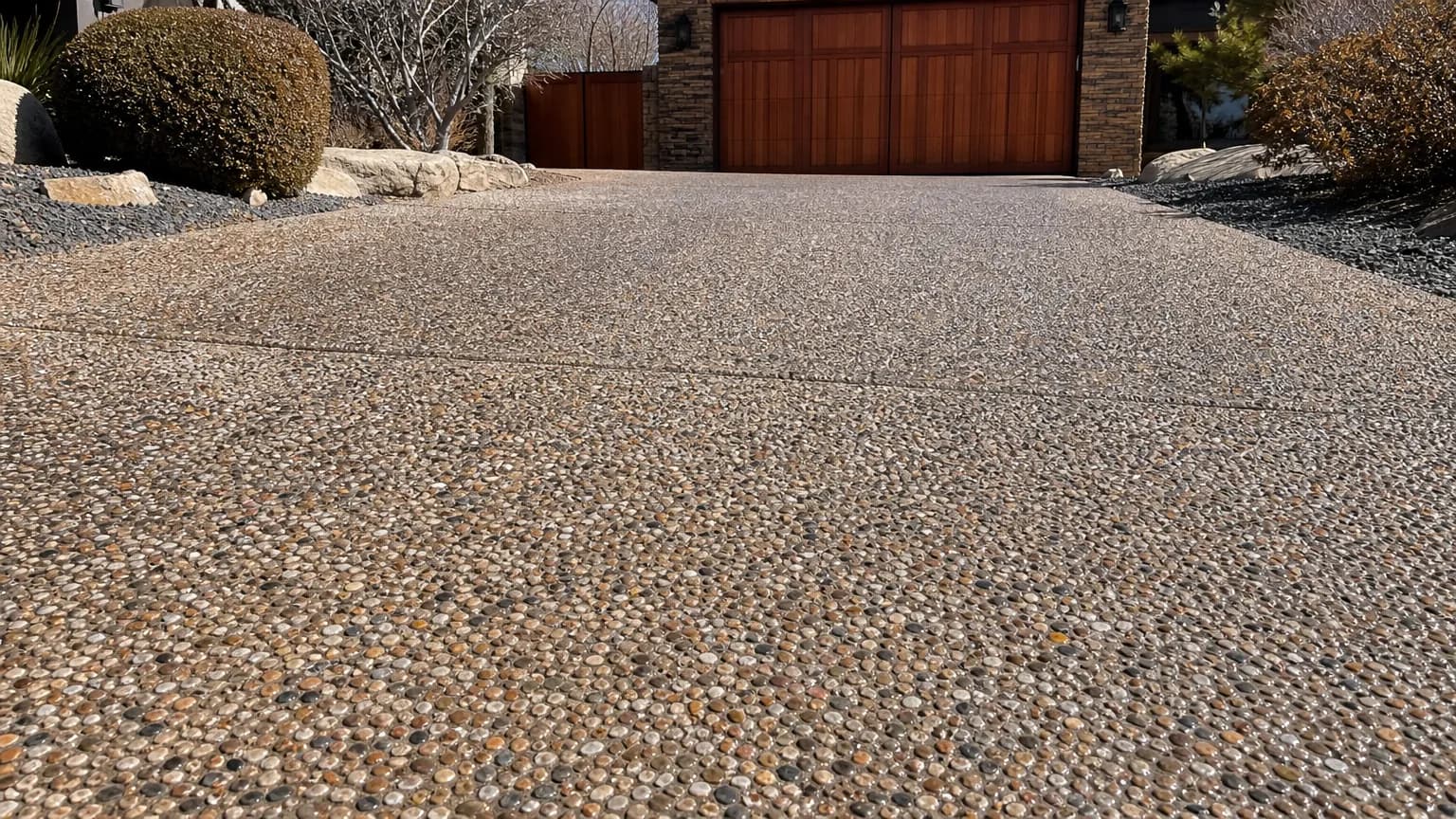
There are two ways to get stone on the surface. The contractor can use a mix with attractive aggregate throughout and expose it, or seed decorative stone onto the surface of a fresh slab and trowel it in. Either way, a surface retarder or a carefully timed wash and brushing removes the cement paste on top, leaving stones partly exposed. After curing, the surface is cleaned and sealed.
Rounded river rock gives a smoother walking surface; crushed stone gives more grip and a sharper texture. Ask to see a sample panel with the actual stone, because colors in a bin look different in a slab.
Why it suits Boise
The texture is the main draw here. On a frosty March morning a broom finish is good and exposed aggregate is better. It also hides tire marks, leaf stains and dust, which is welcome in a dry valley. The tones of tan and gray river stone sit well against foothill landscaping. The trade-off: it is rougher on bare feet and harder to shovel cleanly, and loose stones can pop out of a poorly finished surface.
Cost
National cost guides put exposed aggregate at about $3 to $8 per square foot over the base cost of plain concrete. On a plain driveway range of $6 to $12, that puts an exposed aggregate driveway at roughly $9 to $20 per square foot. Seeded decorative stone runs toward the top. Local quotes set the actual number.
Sealing and care
Sealer locks the stones in, deepens their color and keeps water out of the surface. Exposed aggregate is resealed every few years like any decorative concrete. Keep deicers off in the first winter. Exposed aggregate is also a common edge treatment for landscape curbing and a popular pool deck surface; see concrete sealing for sealer types.
Back to the main guide: Boise concrete contractors.