
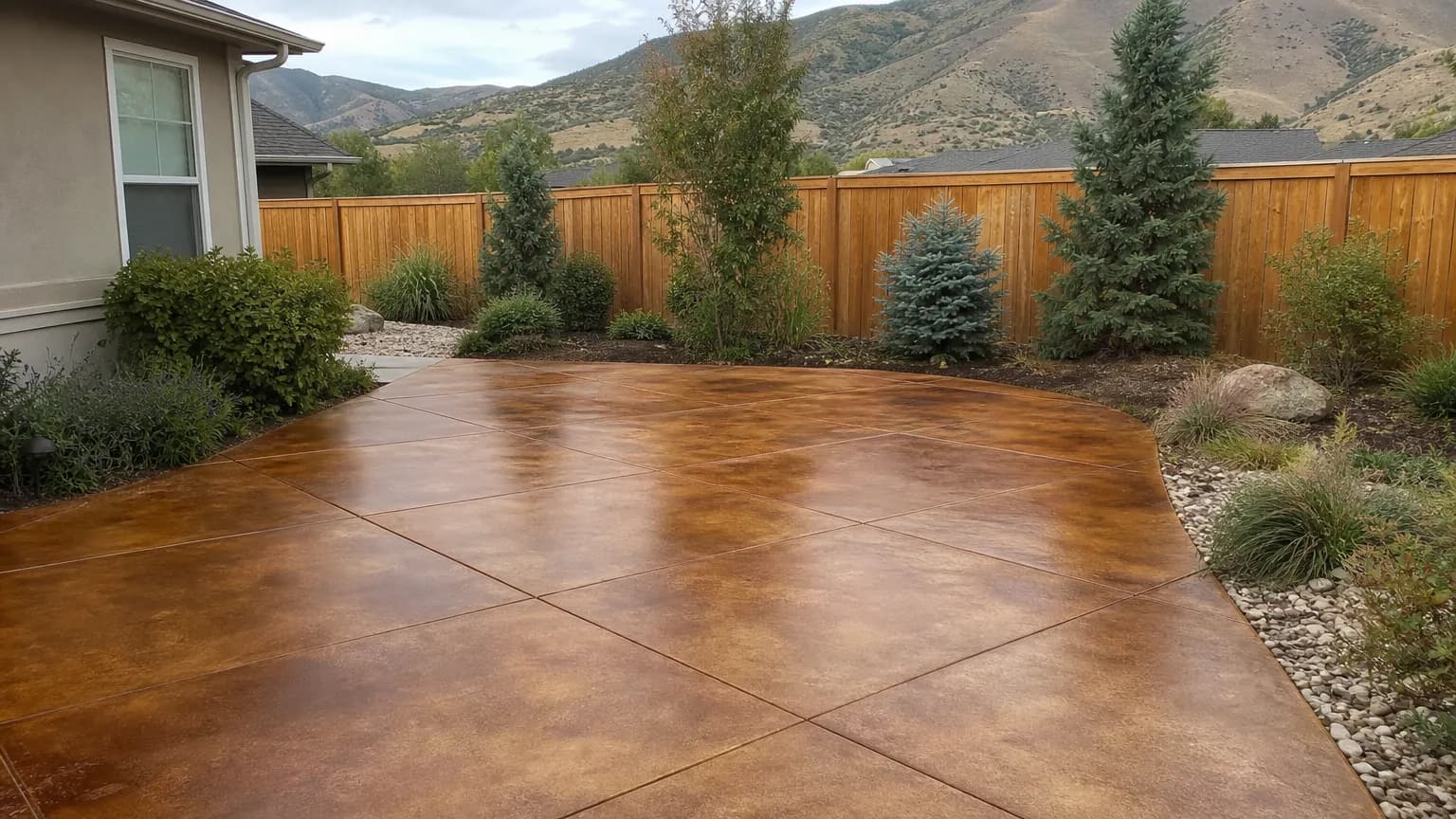
Acid stain or water-based stain
Acid stain is mostly water, hydrochloric acid and metallic salts. It reacts with the hydrated lime (calcium hydroxide) in the concrete, so the color becomes part of the surface and does not peel. Because lime content varies across a slab, the result is mottled and marbled, and temperature and humidity on the day change it too. Two patios stained from the same jug will not match.
Water-based stain sits in the surface pores rather than reacting, and gives more consistent, predictable color. It suits homeowners who want a specific, repeatable shade.
| Acid stain | Water-based stain | |
|---|---|---|
| How it colors | Chemical reaction with lime in the slab | Pigment absorbed into the surface |
| Look | Variegated, marbled, earth tones | More even color |
| Predictability | Low; varies by slab and weather | Higher |
| National cost range | $3 to $25 per sq ft | $3 to $15 per sq ft |
Stain, integral color or both
Integral color is mixed into the concrete at the plant, so it runs all the way through and a chip shows the same color underneath. Bob Vila puts it at about $2 to $6 per square foot on top of the base price. Stain goes on after the concrete cures and is a surface treatment. Many decorative jobs combine them: an integral base color with stain or a release color for depth, especially on stamped work. On an existing slab, stain is the only coloring option short of an overlay; see concrete resurfacing.
Patios, walks and interior floors
Outdoors, stain is most often used on patios and walks, sometimes with saw-cut patterns like diamonds or tile grids cut into the slab before staining. Indoors, it goes on basement floors and slab-on-grade living areas, often after grinding or alongside polished concrete.
Old concrete stains less predictably than new. Sealers, paint, oil, curing compounds and patches all block or change the stain, so a test patch in a hidden spot is worth asking for before the whole slab is committed.
Sealing through Treasure Valley winters
Stained concrete is sealed to protect the color and the surface. Outdoors that seal is working hard: most January nights in the valley drop below freezing, and the area sees more than 100 frost nights a year. Keep deicers off new concrete for its first winter and use sand for traction. Professional sealing with labor runs about $1.35 to $2.50 per square foot nationally; see concrete sealing for sealer types and timing.
What drives the price
HomeGuide puts stained concrete at about $3 to $15 per square foot for water-based stain and $3 to $25 for acid stain, with basic one-color work at $2 to $6 and complex multi-color designs or saw-cut patterns at $12 to $25. Surface prep on an old slab, the number of colors, scoring patterns and the sealer system move a quote within that range.
- Acid or water-based, and which colors?
- How will you clean and prep this slab, and will you do a test patch?
- Which sealer, how many coats, and when does it need resealing?
- Are saw-cut patterns, borders or a second color included?
Back to the main guide: Boise concrete contractors.