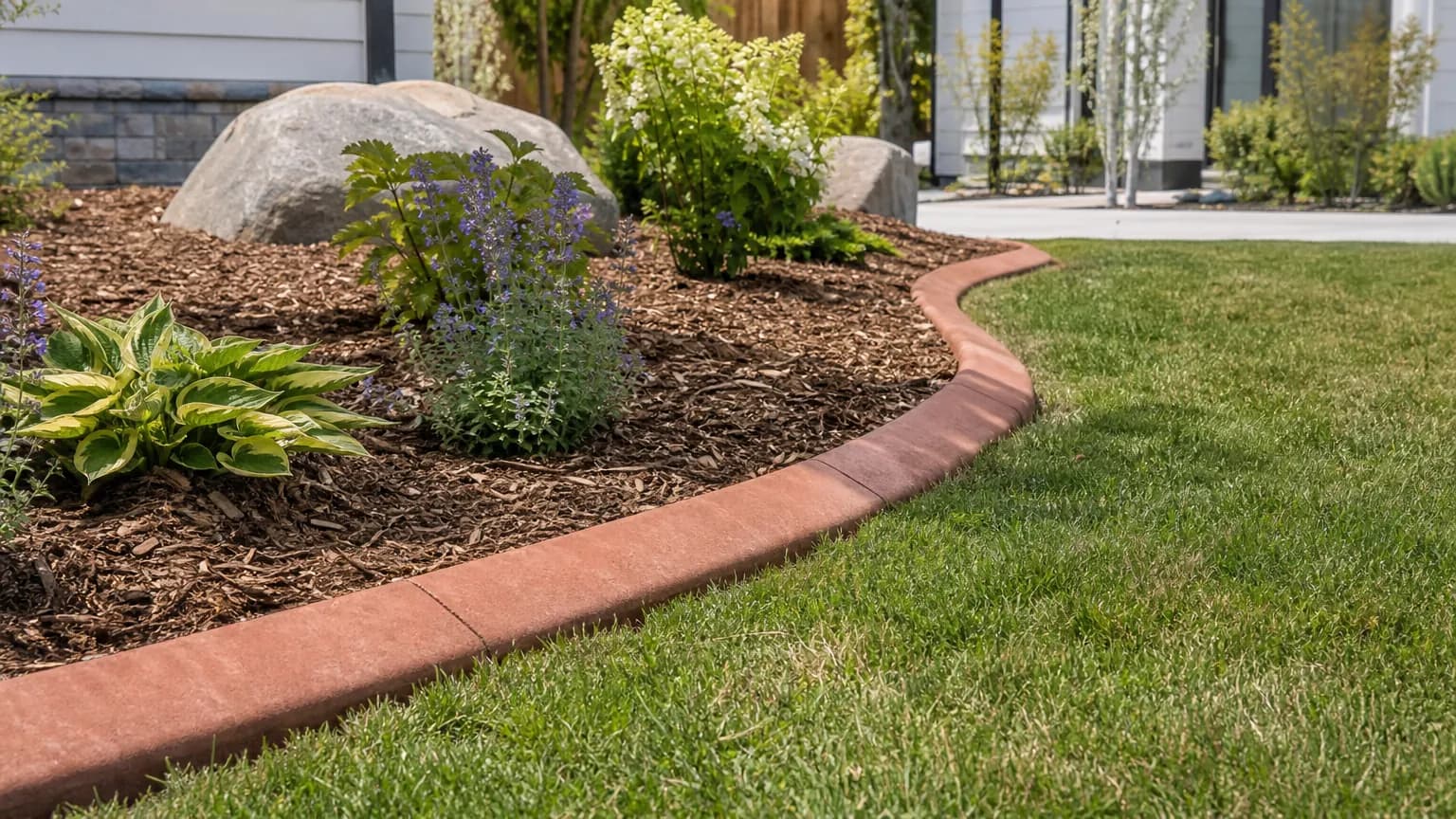
Profiles and finishes
- Slant or mower edge. A sloped face with a flat lip the mower wheel can ride on, so the lawn edge needs less trimming.
- Square or block edge. A clean vertical border, often used around beds and walks.
- Stamped curbing. Brick, stone or slate textures pressed into the fresh curb.
- Colored. Integral color in the mix, often with a darker release for depth.
- Exposed aggregate curbing. The surface washed to show stone, matching an exposed aggregate driveway or walk.
Curbing and sprinklers
Most Treasure Valley yards are watered by pressurized irrigation from canal water, and a sprinkler system lives right along the edge of the lawn. Before curbing goes in, the contractor should locate heads and lines, since the trench and the curb can sit on top of them. Heads that end up behind a curb spray concrete instead of grass. Plan for a mark-out, adjusted heads and a little slack in the schedule.
Freeze-thaw and joints
Curbing is a thin, continuous strip of concrete sitting at the edge of a lawn that gets watered all summer, then freezes most nights in January. Without joints it cracks randomly. Contractors cut control joints at intervals along the run. Sealing helps keep water out of the surface, and resealing every few years is part of owning decorative curbing; see concrete sealing.
What drives the price
Curbing is priced by the linear foot. We did not find a reliable published national range, so we don't quote one. What moves the price: total length (there is usually a minimum), profile, color and stamping, how many tight curves and tree rings, removal of old edging, and sod cutting. Ask for a per-foot price with each option listed so quotes are comparable.
Back to the main guide: Boise concrete contractors.