
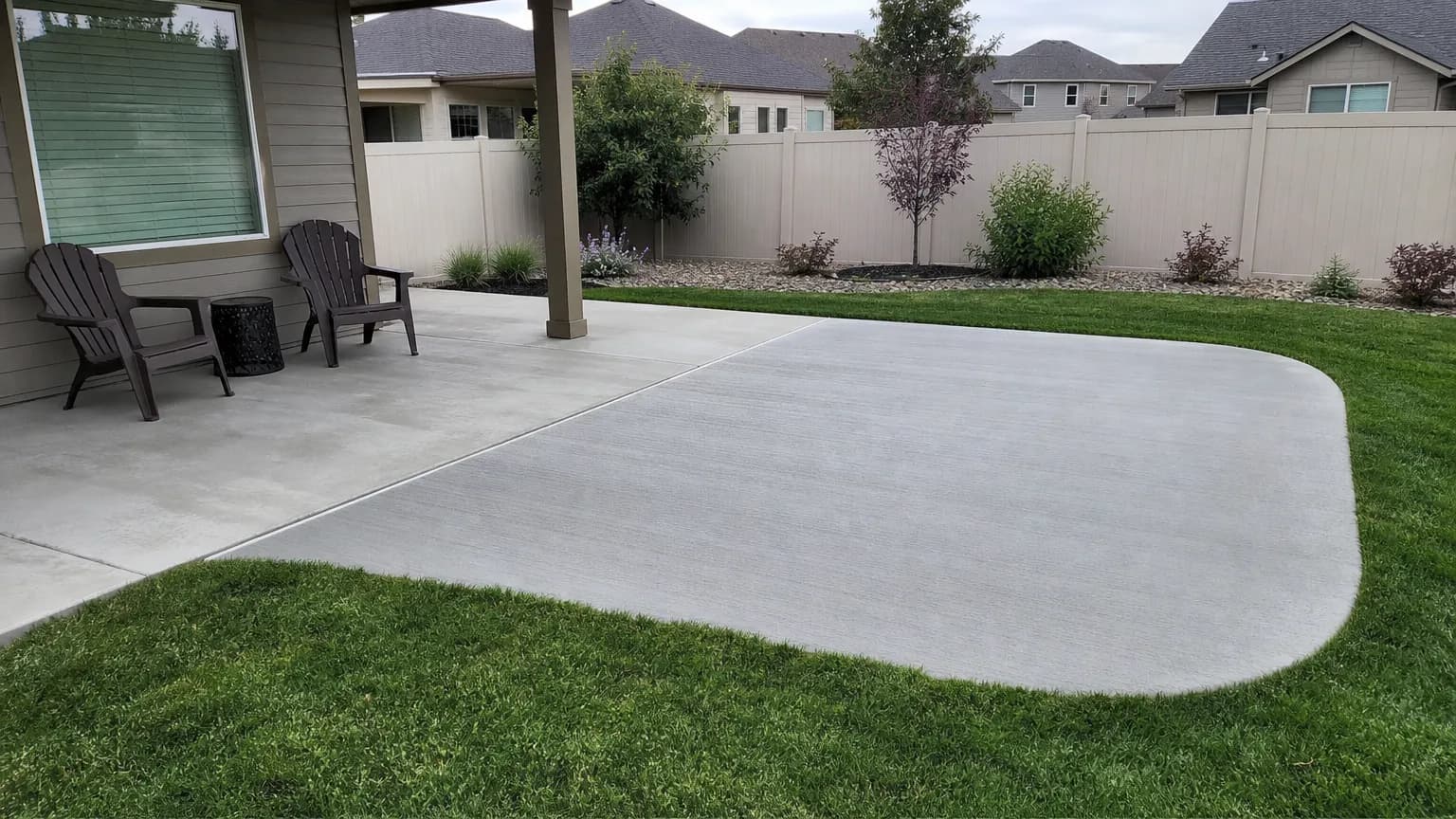
Check the old slab first
An extension is only as good as what it attaches to. If the existing patio has settled toward the house, cracked through or heaved at a corner, adding to it carries the problem forward. Options are to level or repair it first, or to remove it and pour the whole patio new. If the old slab is sound, the contractor plans the new section around it.
Joining new to old
For patios and walks, the usual connection is a full-depth isolation joint: half-inch fiber board or foam along the old edge that lets the slabs move independently. Dowels, drilled and epoxied into the old slab, are the common choice on driveways, where keeping both slabs level under vehicle loads matters more. Ask which one the bidder plans and why.
A ragged old edge gets sawed back to a straight face before the new concrete goes in; see concrete cutting. Joints in the extension should line up with the old pattern where possible, at a spacing of about 8 to 12 feet for a 4-inch slab.
Height, slope and water
The extension has to continue the old patio's slope away from the house. Many Treasure Valley subdivisions run pressurized irrigation through the summer, and a patio edge that sits in sprinkler overspray or under a downspout stays wet and is more likely to settle. Plan where water leaves the slab before forms go in.
Height matters for permits. Boise's homeowner guide requires a building permit for a concrete patio more than 12 inches above grade, a lower trigger than the 30 inches that applies to walks and driveways. On a sloped lot, an extension that steps out over falling ground can cross that line even if the original patio did not.
Matching the finish
A broom finish is easy to repeat. Stamped and colored patios are harder, because patterns, color batches and release colors can differ between pours years apart. Some owners use the extension to change the look on purpose, with a border band, a different finish or stamped concrete on the new part only, so the joint reads as a design line rather than a mismatch.
What an extension costs
HomeGuide prices extending a patio about the same as building a new one, $6 to $16 per square foot, and puts adding 50 square feet at about $300 to $800. Small additions carry a job minimum, so per-foot prices rise on small jobs. Rebar runs about $0.30 to $1.00 per linear foot depending on size. Sod removal, a hot tub pad thickened to carry the load, decorative finishes and work under an existing patio cover add to the quote. For full patio pricing, see concrete patios.
Back to the main guide: Boise concrete contractors.