
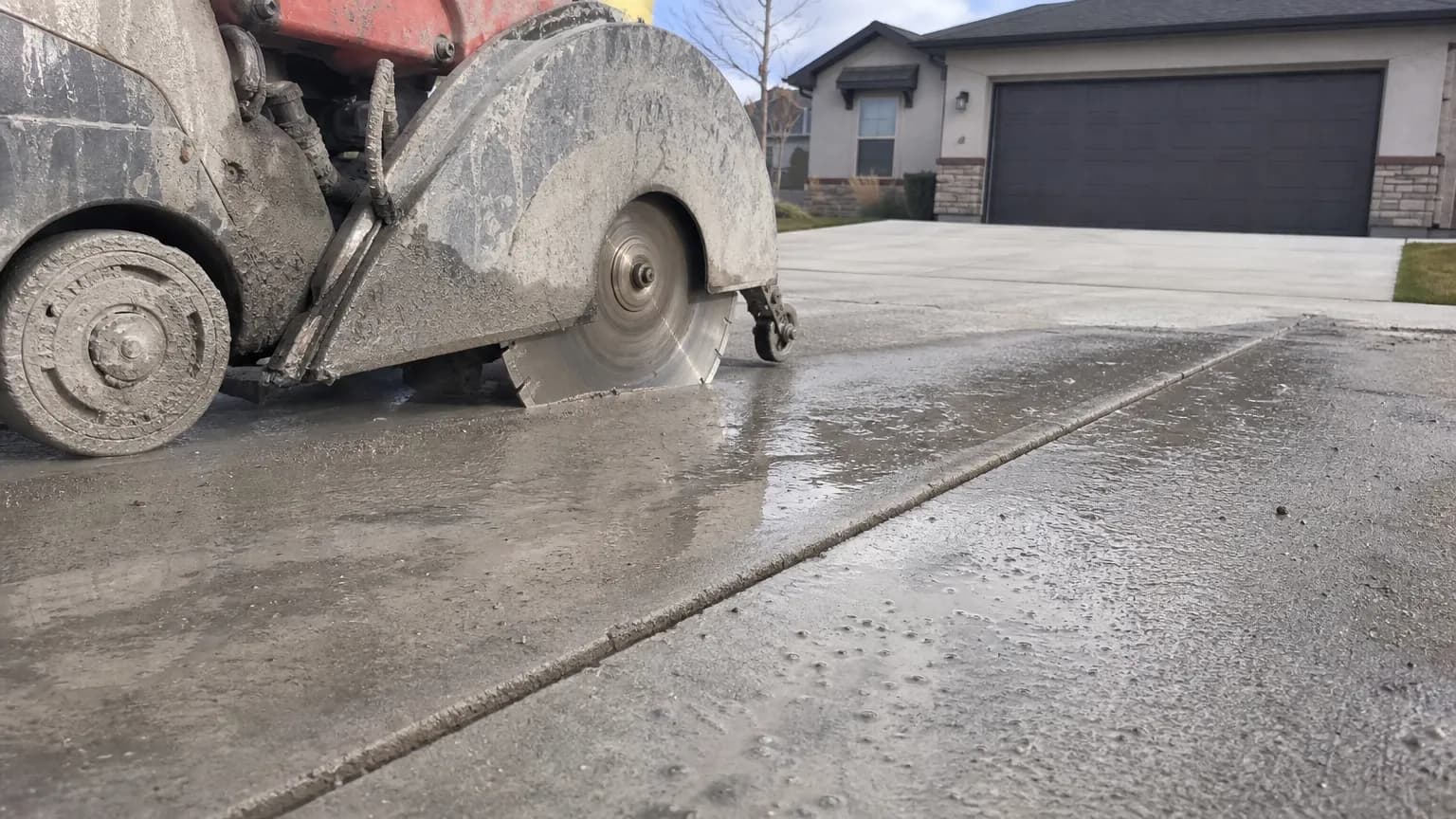
Common cutting jobs at home
- Clean break lines. Sawing a straight edge where an old driveway, patio or walk meets the part being torn out, so new concrete butts to a clean face. See concrete removal and driveway replacement.
- Driveway widening. Cutting back a curb-side edge or a damaged strip before a driveway extension is poured.
- Trenches. Narrow cuts through a garage or basement slab for a new drain line, sewer repair or electrical run, then patched.
- Core holes. Round holes through slabs or walls for dryer vents, plumbing, conduit or post bases.
- Wall openings. Sawing a foundation wall for a door or a basement egress window; this changes the structure, so check permits and engineering first.
Before the saw: Digline and buried lines
Cutting a trench or removing a slab section is excavation once it goes into the ground below. Idaho Code 55-2205 requires notice to the one-number locating service at least two and no more than ten business days before excavating. In Idaho that service is Digline: dial 811. Point out private lines you know about, such as sprinkler and irrigation pipes, to the cutter yourself.
Wet cutting and silica dust
Sawing concrete releases respirable crystalline silica. OSHA's construction silica standard (29 CFR 1926.1153) lists water delivered to the blade as the control method for walk-behind and handheld saws. On a job site that means water hoses, a slurry trail and a cleanup plan: ask where the slurry will go, since washing it into a gutter or storm drain is not a clean finish. Indoors, ask how dust and water will be contained.
Basement egress openings
A finished basement bedroom needs an emergency escape opening. The 2021 model residential code (IRC R310) sets minimums of 5.7 sq ft of net clear opening (5.0 at a grade-level floor), a clear height of at least 24 inches, a clear width of at least 20 inches, and a sill no higher than 44 inches above the floor. Cutting that opening through a poured foundation wall changes the structure, so the permit and engineering questions come before the saw. Confirm which code edition and rules apply with Boise's building division (208-608-7070) or your city.
What cutting and coring cost
Cutting is priced by the linear foot and the depth, and coring by the hole. Published price lists from cutting companies show roughly:
| Work | Typical published price |
|---|---|
| Slab sawing, standard 4 in slab | $4 to $7 per linear ft |
| Slab sawing, general range | $4 to $15 per linear ft |
| Deeper cuts | About $0.75 to $1.50 more per added inch past 6 in |
| Core hole, 4 in through a 4 in slab | $40 to $120 per hole |
| Core hole, 6 to 12 in diameter | $150 to $600 per hole |
| Minimum trip charge | $150 to $300 |
Because of minimums, a single short cut costs more per foot than a long run. If you also need the cut pieces broken out and hauled away, ask whether that is in the number; concrete removal runs about $2 to $6 per square foot in national guides.
Back to the main guide: Boise concrete contractors.